Thumb sucking is completely normal in babies and young children, and in most cases it does not lead to lasting dental problems. The timing and intensity of the habit matter far more than the habit itself.
Knowing what to watch for can save you a lot of worry and help you act at the right moment if something does need attention. At Dentist of West Covina, families in the area bring these exact questions to every checkup, and the answers are almost always more reassuring than parents expect.
Keep reading to learn why the habit starts, when it becomes a concern, what changes you might actually notice in your child's smile, and what options exist if the teeth or bite have already been affected. Taking the next step, whether that is asking a question or booking a visit, does not have to feel like a big deal.
Why Thumb Sucking Is Usually Normal Early On
Thumb sucking is not a bad habit in infants. It is a built-in reflex that helps babies feel safe and manage stress before they have any other tools to do so.
How Self-Soothing Helps Infants and Toddlers
Babies begin sucking movements in the womb. After birth, this reflex becomes one of the primary ways they self-regulate. When your infant reaches for their thumb during a nap or an overstimulating moment, their nervous system is doing exactly what it is supposed to do.
Toddlers use the habit the same way. Transitions like starting daycare, a new sibling arriving, or simply feeling tired can all trigger thumb sucking. It is a coping mechanism, not a behavioral problem. Trying to stop it too aggressively before a child is developmentally ready often creates more stress without solving the habit.
Why Most Habits Fade Without Treatment
Most children stop thumb sucking on their own between ages two and four. Peer awareness, growing independence, and natural changes in how they manage emotions all play a role. The habit tends to quiet down as children gain more language and social skills to express their needs.
According to the American Dental Association, this is a natural, non-nutritive sucking reflex that rarely causes dental problems before age four or five. Most children have baby teeth during those early years, and they are meant to be replaced. Even if mild shifting occurs, the incoming permanent teeth often have a chance to settle into a healthy position once the habit stops.
The real question is not whether your child sucks their thumb now. It is whether the habit is still active when the permanent teeth begin to arrive.
When the Habit Starts to Affect Oral Development
Around age three to four, the picture starts to change. The longer the habit continues beyond this window, the more likely it is to leave a mark on your child's teeth and jaw development.
Why Age Three to Four Is the Key Turning Point
Between ages three and four, the jawbone becomes more responsive to repeated pressure and force. A thumb resting in the mouth applies consistent pressure to the upper front teeth, the lower front teeth, and the roof of the mouth. When that pressure is there day after day, the bone and tissue begin to adapt to it.
This is also the window when the first permanent molars begin to erupt in some children. Even though the front permanent teeth do not typically emerge until around age six or seven, the foundation for where those teeth will land is already being shaped. Habits that persist when permanent teeth come in carry a much higher risk of causing lasting changes to alignment and bite.
How Frequency and Intensity Change Risk
Not every thumb sucker faces the same level of risk. The two factors that matter most are how often the thumb goes in and how hard the child is sucking.
A child who lightly rests their thumb during sleep creates less force than a child who actively and vigorously sucks throughout the day. Dentists sometimes describe this as the difference between passive and active sucking. Passive habits tend to resolve with fewer complications.
Here is a quick comparison to help frame the risk levels:
Factor | Lower Risk | Higher Risk |
Age | Under 3 years | Over 4 years |
Frequency | Only during sleep | Throughout the day |
Intensity | Light thumb resting | Vigorous active sucking |
Teeth present | All baby teeth | Permanent teeth arriving |
The position of the thumb also matters. A thumb pressing upward and outward on the front teeth creates different forces than one resting more passively. These are the kinds of details a dentist can assess during a routine exam.
Changes Parents May Notice in the Smile and Bite
Some of the changes that come from prolonged thumb sucking are visible to parents. Others are subtler and only show up on an X-ray or during an oral exam.
Front Teeth That Begin to Protrude
The most common and visible change is the upper front teeth beginning to tip outward. Parents often describe this as their child's teeth starting to look like they are leaning forward. This happens because the thumb's upward and outward pressure gradually pushes the upper incisors in that direction over time.
This is what many people refer to casually as "buck teeth." The clinical term is dental protrusion, and it ranges from mild to significant depending on how long and how intensely the habit continued. In milder cases, the teeth may shift back somewhat once the habit stops. In more established cases, orthodontic treatment is often needed.
Open Bite and Trouble Bringing Teeth Together
An open bite means there is a gap between the upper and lower front teeth even when the back teeth are closed. A child with an open bite may have trouble biting into a sandwich or an apple cleanly. You might notice them tearing food with their side teeth more than their front ones.
This pattern develops because the thumb occupies the space where the upper and lower front teeth would normally meet. The teeth erupt around the thumb rather than toward each other. Open bites can be one of the more challenging bite patterns to correct, especially if they persist into the permanent dentition.
Palate Shape and Alignment Shifts
The roof of the mouth, or palate, can also be affected. Prolonged thumb sucking can create a high, narrow palate shape because the normal outward pressure of the tongue on the palate is disrupted when the thumb takes its place.
A narrowed palate affects how the upper and lower arches fit together. It can contribute to a crossbite, where some upper teeth sit inside the lower teeth rather than outside them as they should. It can also affect speech, sometimes producing a frontal lisp or altered tongue position when pronouncing certain sounds.
Pacifier Use Versus Thumb Habits
Many parents wonder whether pacifier use is safer than thumb sucking. The short answer is that both habits carry similar dental risks, but one is significantly easier to manage.
Why Pacifiers Can Be Easier to Wean
With a pacifier, you have physical control. You can limit when it is offered, gradually modify it, and eventually remove it from the environment entirely. With a thumb, that level of control does not exist. The thumb is always available, always accessible, and often used unconsciously during sleep.
Research on pediatric oral development suggests pacifier use has a slight advantage over thumb sucking precisely because parents can more easily manage and phase it out. The dental effects of pacifier use, including open bite and palate narrowing, are largely the same, but the weaning process is typically more straightforward.
The American Academy of Pediatrics recommends weaning children from pacifiers by 18 months to reduce the risk of ear infections, which is an earlier target than most dentists set for addressing thumb sucking.
When Either Habit Becomes a Concern
The table below shows how both habits compare across the factors that matter most for dental development:
Factor | Pacifier | Thumb Sucking |
Parent control over habit | High | Low |
Recommended stop age (dental) | By age 2 to 3 | By age 3 to 4 |
Risk of open bite | Moderate | Moderate to high |
Risk of palate narrowing | Moderate | Moderate to high |
Ease of weaning | Easier | More challenging |
Both habits become a dental concern when they persist past age three to four, especially if they occur frequently or with high intensity. A dentist can examine the teeth and bite during a routine visit and tell you whether any early changes are evident.
When to Talk to a Dentist About the Habit
You do not need to wait for a visible problem before bringing up thumb sucking at your child's dental visit. A proactive conversation is always the easier path.
Signs a Home Approach May Not Be Enough
Some children respond well to gentle reminders, reward charts, and positive reinforcement at home. Others have a habit so ingrained that home strategies alone do not move the needle. Here are signs it may be time to bring in professional support:
Your child is four or older and the habit is still happening during the day
The front teeth are visibly tipping forward, or a gap has appeared between upper and lower teeth
Your child's speech sounds have changed, particularly with sounds like "s" or "th"
Home strategies have been tried consistently for several weeks without progress
Your child seems distressed about the habit but cannot stop on their own
What a Dental Evaluation May Look For
During an evaluation, a dentist will examine the position of the front teeth, check whether a gap exists between the upper and lower incisors when the back teeth are together, assess the width of the palate, and review X-rays to see how the permanent teeth are developing beneath the surface.
This kind of exam gives you specific, objective information rather than general worry. Knowing exactly what is happening and what is not happening makes the next decision much easier. Sometimes the answer is to simply monitor. Other times, it is to start a habit-breaking plan or discuss early orthodontic options.
What Support and Treatment Can Involve
There is a wide range of support available, from simple behavioral strategies to professional appliances and orthodontic care, and the right starting point depends on your child's age and what the teeth are already showing.
Gentle Habit-Breaking Strategies for Parents
Positive reinforcement tends to work better than criticism or punishment. Children respond better to being celebrated for progress than to being shamed for setbacks. Practical strategies that families find helpful include:
Using a reward chart where your child marks each thumb-free day
Offering a small, non-food reward for reaching a weekly goal
Talking openly with your child about why stopping helps their smile
Putting a bandage or soft glove on the thumb at night as a tactile reminder, not a punishment
Identifying triggers, like tiredness or screen time, and addressing those moments proactively
For some children, hearing directly from a dentist carries more weight than hearing from a parent. A brief, friendly conversation at a checkup visit can sometimes be more effective than weeks of at-home effort.
How Future Orthodontic Care May Help
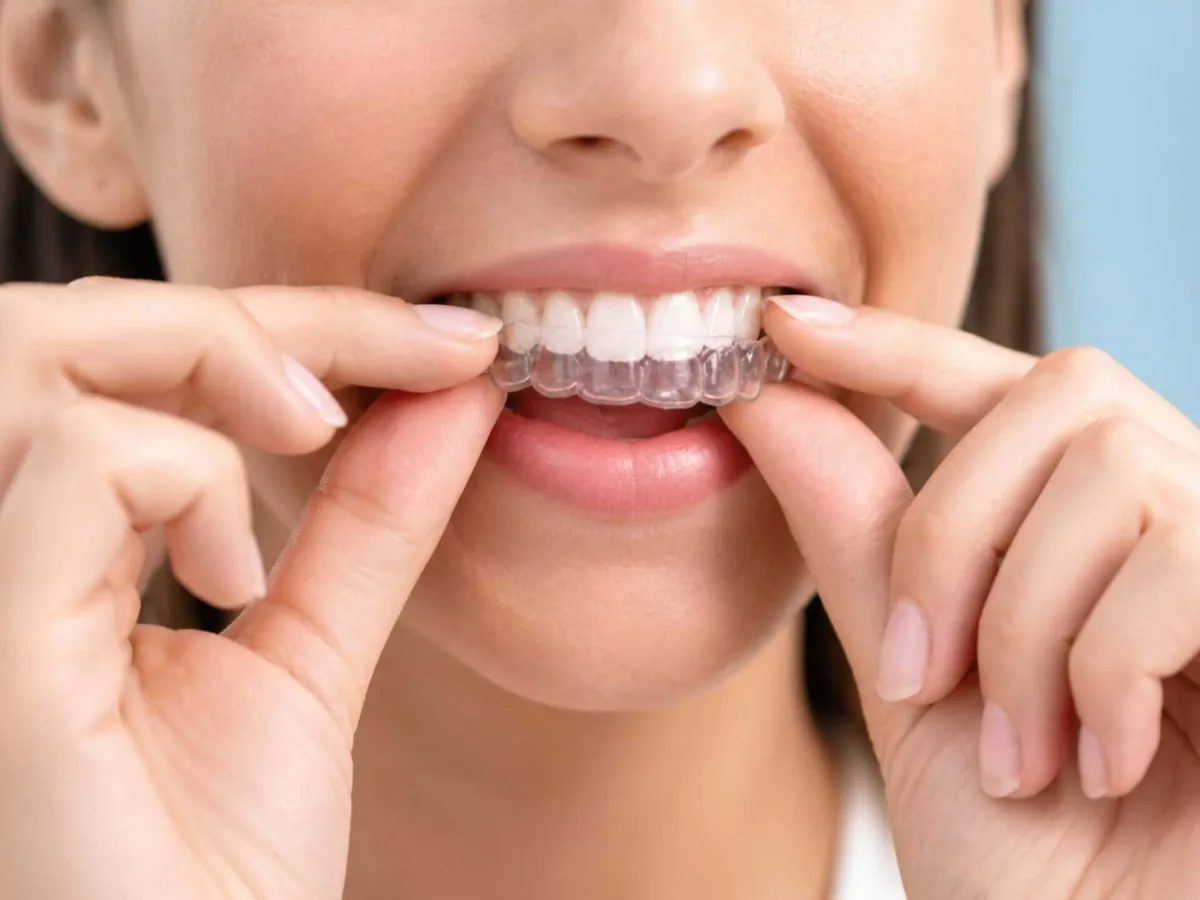
If the teeth or bite have already shifted, orthodontic treatment can address the changes once the habit is fully stopped and enough permanent teeth are in place. Options like braces or Invisalign® for teens can correct protrusion, close an open bite, and realign teeth that have drifted.
Invisalign Teen is one option that works well for motivated older children and teens with a mostly complete permanent dentition. It uses clear, removable aligners to gradually shift teeth without the dietary restrictions that come with traditional braces.
For more complex cases involving palate width or crossbite, a palatal expander may be recommended first, followed by braces or aligners to refine alignment. The important thing to know is that orthodontic changes from thumb sucking are treatable. Earlier is usually easier, but there is no age at which the window has closed entirely.
Frequently Asked Questions
At What Age Should I Be Concerned if My Child Is Still Sucking Their Thumb?
Most children stop on their own between ages two and four, so gentle monitoring before that point is appropriate. If the habit remains active and frequent after age four, especially as permanent teeth begin to emerge, it is worth discussing with your child's dentist.
What Changes in the Front Teeth or Bite Can Happen From Long-Term Thumb or Finger Sucking?
The most common changes are upper front teeth tipping outward (protrusion), a gap between upper and lower front teeth when the back teeth are closed (open bite), and a high, narrow palate. These changes vary in severity depending on how long and how vigorously the habit continued.
Can Baby Teeth Shift Back on Their Own After My Child Stops, or Will We Need Orthodontic Treatment?
Baby teeth can sometimes self-correct after the habit stops, particularly if the child stops before age four and the changes are mild. Once permanent teeth are involved or the palate has narrowed, professional orthodontic treatment is usually needed to fully correct alignment.
How Can I Tell if My Child's Thumb Habit Is Affecting Speech or Jaw Growth?
Listen for difficulty with sounds such as "s," "z," "th," or "l," which can be affected by an altered tongue position. A frontal lisp is a common early sign. Changes in jaw shape or palate are better assessed by a dentist using a visual exam and X-rays.
What Are Gentle, Practical Ways to Help a Child Stop Thumb Sucking Without Adding Stress?
Reward charts, positive reinforcement, and open conversations about dental health tend to work better than punishment or constant reminders. Identifying triggers such as tiredness or boredom and addressing them with alternative comfort objects or routines can also help.
If Teeth Have Already Moved, What Treatment Options Can Help, Like Invisalign, Braces, or Composite Bonding?
For alignment issues caused by prolonged thumb sucking, braces and Invisalign Teen are the most common treatment paths, depending on the child's age and case complexity. In rare cases where only minor cosmetic corrections are needed on an adult tooth, composite bonding can refine the tooth's shape, but structural changes to the bite typically require orthodontic treatment.
Your Child's Smile Has More Room to Recover Than You Might Think
Thumb sucking is one of those parenting concerns that feels more alarming than it usually turns out to be. Most children stop the habit before it causes lasting dental changes. And for those who do develop some shifting or bite issues, the options are straightforward and effective.
The most useful thing you can do right now is stay informed, watch for the specific signs described in this article, and bring your child in for regular dental exams so any changes are caught early. Dr. Hamid Barkhordar, who completed his training at the Harvard School of Dental Medicine, evaluates orthodontic concerns as part of a personalized plan tailored to your child's actual development, not a one-size-fits-all approach.
Ready to get some real answers about your child's smile? Call Dentist of West Covina at (626) 239-8978, and the team will find a time that works for your family. You can also book your appointment online and let the team walk through every option with you, no pressure, no rush.