You are sitting at the kitchen table, looking at your teenager's crowded smile, and wondering whether Invisalign® is the right call. Or maybe you are the one who has been putting off straightening your own teeth for years and finally want to do something about it. Either way, the question remains: does Invisalign® work differently depending on your age, and does that actually matter?
Invisalign® for adults vs teens differences go deeper than most people expect. At Dentist of West Covina, we know clear aligner treatment is not a one-size-fits-all prescription. Teen and adult versions are built with different biological realities and daily routines in mind, and those differences shape everything from how the trays are designed to how long treatment typically takes.
Keep reading to learn exactly how these two treatment paths compare, what questions are worth asking before you commit, and how to approach a consultation with confidence. Getting clear on your options is easier than you might think, and it does not have to feel like homework.
How Invisalign® Works Across Age Groups
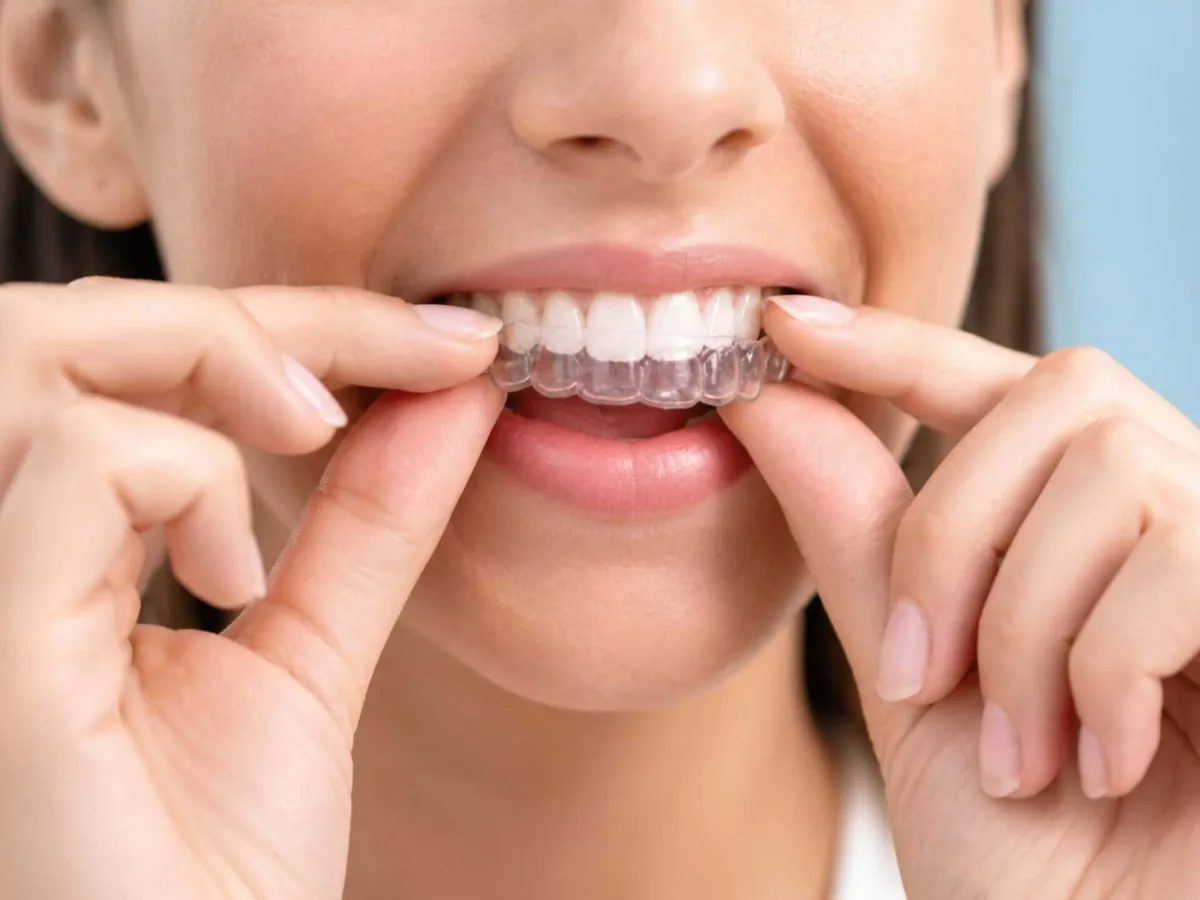
Invisalign® uses the same core technology for every patient: a series of custom-fit, clear, removable aligners that gradually shift teeth into better positions. That part is consistent whether you are 15 or 45.
Core Similarities in Clear Aligner Treatment
Both adult and teen versions of Invisalign® address common orthodontic concerns such as crowding, spacing issues, overbites, and underbites. Both are removable for eating, brushing, and flossing. Both are nearly invisible when worn, which is one of the biggest reasons patients in West Covina choose them over traditional metal braces.
The treatment process also looks similar on the surface. You get a series of trays; you wear each set for about one to two weeks, and you check in with your provider at scheduled intervals. Progress is mapped using digital scans and a planned sequence of movements from the start.
The aligner material, the attachment buttons that help anchor specific tooth movements, and the general wearing schedule all apply to both age groups. What changes is how each version is designed to accommodate the realities of the wearer.
Why Age Still Changes the Planning Process
A teenager's jaw and bone structure are still developing. That changes how tooth movement is planned and how the aligners are built to accommodate growth. An adult's bone is fully set, which has its own advantages and its own complications, especially if there is prior dental work involved.
Planning for a teen also means accounting for teeth that may not have fully erupted yet. Planning for an adult often means working around crowns, old fillings, or years of wear that have changed the shape or position of teeth. The clinical starting point differs for each group, which shapes the entire treatment map.
Factor | Teens | Adults |
Jaw development | Still growing | Fully set |
Tooth eruption | May be ongoing | Complete |
Bone density | More adaptable | Less flexible |
Prior dental work | Usually minimal | Often present |
Compliance tools | Built into aligners | Managed by patient |
That biological difference is exactly what drives the design features you will find in the teen-specific version of Invisalign®.
Teen-Specific Design Features
Invisalign® Teen is a version of clear aligner treatment designed specifically for adolescents and includes features that standard adult aligners lack. These are not cosmetic differences; they solve real clinical problems.
Compliance Indicators and Wear Tracking
Each Invisalign® Teen aligner comes with small blue compliance indicator dots on the back molars. These dots fade with consistent wear, giving parents and providers a visual check on whether the trays are actually being worn the required 20 to 22 hours per day.
This matters because the most common reason Invisalign® treatment runs long is inconsistent wear. A teen who pops their aligners out at lunch and forgets to put them back in can lose days of progress without realizing it. The compliance indicators make that visible at each check-up appointment.
Invisalign® Teen also typically includes a set of replacement aligners at no extra cost, because lost or damaged trays are genuinely more common in teenagers' daily routines. That safety net can save a family significant expense and stress if a tray goes missing during a school week.
Room for Erupting Teeth and Growth Changes
Invisalign® Teen aligners include eruption compensation, which are small spaces built into the aligner design to make room for teeth that have not yet fully erupted. This is a critical difference because forcing a rigid aligner over an erupting tooth can create problems rather than solve them.
Eruption tabs create physical space in the tray where a new tooth is expected
Treatment planning accounts for the estimated position of fully erupted teeth
Adjustments can be made mid-treatment as growth progresses
Providers monitor jaw development at each visit, not just tooth position
A teenager who starts Invisalign® at 13 is in a different biological situation than one who starts at 17. The planning process reflects that, and so does the physical design of the aligners. That leads to an important question: what happens when the jaw is fully grown and none of those accommodations are needed anymore?
Adult Treatment Considerations
Adults bring a different set of clinical variables to Invisalign® treatment, and most of those variables make the planning process more detailed rather than simpler.
Fully Set Bone and Tooth Movement Factors
Adult bone is denser and less adaptable than adolescent bone. That does not mean Invisalign® does not work for adults; it works well. But it can mean that certain tooth movements take longer or require more precise attachment placement to achieve the intended result.
Adults also tend to start with more established bite patterns. Years of grinding, chewing habits, or untreated crowding can create compensations throughout the mouth that an orthodontic provider needs to map carefully before treatment begins.
The advantage of fully set bone is predictability. An adult's teeth are not going to shift unexpectedly because of jaw growth mid-treatment. What you plan is largely what you get, which can make the progression of the case more straightforward for mild to moderate corrections.
Past Dental Work and Oral Health Variables
Adults frequently have crowns, veneers, bonding, or implants that affect how aligners fit and how force is applied during treatment. Invisalign® attachments cannot bond to certain materials the same way they bond to natural enamel, so the provider needs to plan around existing restorations.
Gum health is also a bigger variable for adults. Active gum disease or significant bone loss must be addressed before clear aligner treatment begins. Starting Invisalign® on an unhealthy foundation can accelerate existing problems rather than improve the smile.
Existing crowns or veneers may limit attachment placement
Gum recession can affect long-term tooth stability during movement
Old fillings may need evaluation before treatment begins
Teeth that have shifted over decades may require more complex movement sequences
Adults who have avoided the dentist for years sometimes discover that addressing underlying oral health issues is the first step before Invisalign®. That evaluation process matters more than most people expect.
Daily Life, Responsibility, and Motivation
The mechanics of Invisalign® only work if the aligners are actually being worn. That is where the teen and adult experience diverges most sharply in practice.
School, Sports, and Social Routines
A teenager's day is full of moments when aligners might come out and not go back in quickly. Lunch periods, sports practices, band rehearsals, sleepovers at friends' houses, and school photos all create situations in which a tray might be removed or forgotten.
Contact sports add a specific consideration. Invisalign® aligners are not a substitute for a proper mouthguard, and wearing a mouthguard over aligners is not ideal. Teens who play football, lacrosse, or wrestle typically need to remove their aligners during practice and games, and that time adds up over the season.
Social pressure around appearances can actually work in Invisalign's favor for teenagers. Many teens prefer clear aligners specifically because they feel less self-conscious than metal brackets, and that preference can motivate better compliance than a parent's reminders alone.
Work Schedules, Habits, and Self-Discipline
Adults generally have stronger self-discipline with wear time, but busy schedules create their own traps. Long meetings, client lunches, and networking events can stretch a two-hour removal window into a six-hour gap. That is especially common in the first few weeks of treatment before the routine becomes automatic.
Adults who drink coffee throughout the workday also need to adjust their habits. You cannot drink hot beverages or anything other than plain water with aligners in, as it can stain or warp the trays. That change alone catches many adult patients off guard in the first week.
Daily Challenge | Teens | Adults |
Consistent wear time | Harder without reminders | Easier with routine |
Food and drink habits | Generally adaptable | Coffee/alcohol adjustments needed |
Sports/activities | Mouthguard conflicts | Less common |
Motivation source | Social/aesthetic | Professional/personal goals |
Lost tray risk | Higher | Lower |
Motivation tends to be deeper and more self-directed for adults, but that does not always translate to easier compliance. Both groups succeed best with a provider who checks in consistently and adjusts the plan when real life gets in the way.
Case Complexity and Alternative Options
Invisalign® is effective across a wide range of orthodontic cases, but it is not the right fit for every situation.
When Braces May Be the Better Fit
Some bite corrections and tooth movements are simply more predictable with traditional braces. Severe rotations, significant vertical movement, and complex bite corrections often respond better to fixed appliances that the patient cannot remove and that apply continuous, precise force.
For teenagers with very complex bite issues or multiple teeth still erupting, a provider may recommend braces first and suggest Invisalign® later as a refinement option. For adults with significant bone loss or compromised gum health, fixed braces may offer better control and a lower risk of complications.
The decision is never about which option is better in general. It is about which option fits the specific clinical picture for that patient at that moment.
What a Professional Orthodontic Evaluation Includes
A thorough orthodontic evaluation goes well beyond looking at the front teeth. It includes digital X-rays, bite analysis, photos, and often a 3D scan that maps the entire arch. The provider looks at jaw relationships, bone levels, root positions, and the condition of any existing dental work.
Digital X-rays assess bone levels and root health
Bite analysis identifies how upper and lower teeth meet
3D scans create the treatment simulation
Photos document the starting point for comparison
Medical and dental history review flags issues that affect treatment
Choosing the Right Path in West Covina
Getting to the right decision comes down to asking the right questions before you walk into a consultation.
Questions Parents and Adults Should Ask
Whether you are a parent researching options for your teenager or an adult considering treatment for yourself, the evaluation conversation matters. Going in with specific questions helps you get answers that actually move the decision forward.
Is my case (or my teenager's) within the range that Invisalign® handles well?
How many trays are estimated, and what does the movement sequence look like?
What existing dental work could affect aligner fit or attachment placement?
What is the realistic wear-time commitment given our daily schedule?
If compliance is an issue mid-treatment, what options are available to get back on track?
For parents, it also helps to have a frank conversation with your teenager before the consultation. A teen who genuinely wants clearer teeth tends to wear aligners more consistently than one who feels the treatment was decided for them.
When to Schedule a Personalized Consultation
If your teenager's permanent teeth are mostly in and you have noticed crowding or spacing, the evaluation conversation is worth having now. Waiting rarely simplifies orthodontic cases, and early assessment does not commit you to anything.
For adults who have been thinking about Invisalign® for a while, there is rarely a better time than when you are already asking. Mild to moderate cases often move quickly for adults when compliance is solid, and a consultation will tell you specifically what your timeline and investment would look like.
Frequently Asked Questions
Is Invisalign Typically Faster for Teens Than Adults, and Why Does the Timeline Change?
Not necessarily. Teens can sometimes see faster movement because their bone is more adaptable, but compliance plays a bigger role than biology in most cases. An adult who wears aligners consistently 22 hours a day will typically progress faster than a teen who is inconsistent.
What Are the Main Differences in Invisalign® Attachments and Elastics for Teens Versus Adults?
Both groups can require attachments, which are small tooth-colored buttons that help guide specific movements. Teens may also need elastics to correct bite issues, as do some adults. The placement and number of attachments depend on case complexity, not age group specifically.
How Do Invisalign Compliance Features for Teens Compare to What Adults Need With Busy Schedules?
Invisalign® Teen includes blue wear indicator dots that fade with consistent use, giving parents and providers a visual check. Adults do not have those indicators and are expected to self-manage wear time, though some providers use app-based tracking tools for accountability.
Does Invisalign® Work Differently if a Teen Still Has Baby Teeth or New Adult Teeth Coming In?
Yes. Invisalign® Teen includes eruption compensation tabs that leave space in the aligner for teeth still coming in. A teen with several baby teeth remaining may not be a candidate yet, and the provider will assess dental development at the evaluation to determine timing.
How Do Cost and Insurance Benefits for Invisalign® Differ Between Teens and Adults?
Many orthodontic insurance plans cover Invisalign® Teen at the same rate as braces for qualifying patients under 18. Adult Invisalign® coverage varies widely by plan. Your provider's office can verify benefits before treatment begins so there are no surprises.
When Should a Parent Consider Braces Instead of Invisalign® for Their Teen's Bite and Healthy Smile Goals?
Braces are often the stronger choice for severe crowding, complex bite corrections, or significant vertical tooth movement. If a teen has multiple teeth still erupting or a bite issue that requires precise, continuous force, a provider may recommend braces for the main phase, followed by Invisalign® later for refinement.
Start Your Journey to a Straighter Smile
Choosing between Invisalign® for adults and teens involves understanding unique dental needs and daily habits. Whether you are seeking treatment for your teenager or yourself, the right plan can lead to a healthier, more confident smile.
Ready to see if Invisalign® is right for you? Contact Dentist of West Covina today to schedule your consultation and take the first step toward a straighter smile.