You wake up, and your jaw already feels tired. At Dentist of West Covina, we find that many patients first notice symptoms like aching teeth or small chips during their morning routine. These are the moments when people first suspect something is happening during sleep, even if they have no memory of it.
Most people are unaware of the damage caused by teeth grinding at night until it becomes clearly visible as worn enamel or fractured surfaces. Because sleep bruxism happens during unconscious sleep, it can go undetected for months while enamel wears down and the jaw joint takes on more stress than it was built to handle.
Keep reading to learn what the earliest warning signs look and feel like, how grinding changes your teeth over time, and what your options are once you decide to act.
Early Warning Signs You May Notice in the Morning
The clearest clues about nighttime grinding often show up in the first hour after you wake up. Your body has been working hard during sleep, and the signs tend to be subtle at first but grow more noticeable over time.
Jaw Soreness and Tightness
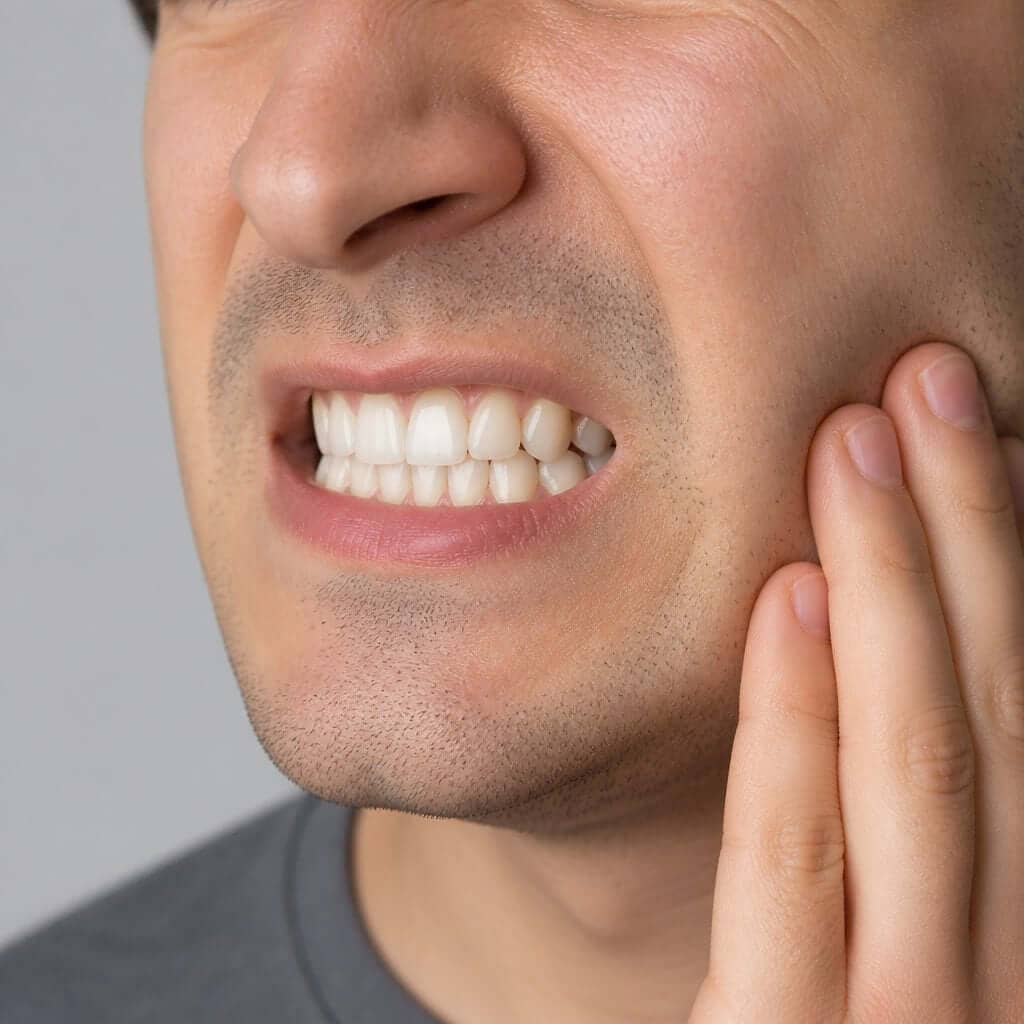
A sore jaw in the morning is one of the most consistent early signals of sleep bruxism. The muscles used for chewing can clench for hours during sleep, and you feel it the next day, much like overworked muscles after exercise.
You might notice tightness when you try to open wide, or a dull ache along the sides of your face near your ears. Some people feel it more on one side, depending on how they favor their jaw during sleep.
The soreness usually fades by mid-morning, which is part of why people dismiss it. If it keeps returning, that pattern matters more than any single morning of discomfort.
Morning Headaches and Facial Fatigue
Headaches that show up right after waking, especially across the temples or at the back of the skull, are commonly linked to nighttime clenching. The temporalis muscle runs along the side of your head and activates every time your jaw tightens.
Sustained pressure through the night means that muscle is fatigued before your day even starts. The result is a dull tension headache that can feel similar to a stress headache or sinus pressure.
Many people treat these headaches with over-the-counter pain relievers for years without realizing the jaw is the source. If your headaches are gone by noon but come back the next morning, that timing is worth paying attention to.
Tooth Sensitivity and Small Chips
Enamel is the hardest material in your body, but repeated grinding pressure wears it down over time. When the outer layer thins, teeth become more reactive to temperature, acidic foods, and even cold air.
Small chips on the edges of front teeth are another early sign. These are often painless and easy to overlook, but they indicate that grinding forces are strong enough to fracture tooth structure. A chip that appears without any obvious trauma is a meaningful clue.
Sensitivity that feels like a quick zing or mild ache when eating or drinking, without any cavity or gum recession, is worth mentioning at your next dental visit. The pattern of where sensitivity appears can help a dentist identify grinding as the likely cause.
How Sleep Bruxism Wears Down Teeth Over Time
The early symptoms described above are uncomfortable. What comes next, if the grinding continues unchecked, is structural damage that is far more costly and complex to address.
Enamel Loss and Flattened Biting Edges
Enamel does not grow back. Once grinding removes it, that protection is gone permanently. Over months and years, the biting edges of teeth flatten out, and the back teeth lose their natural shape and grooves.
Flat teeth change the way your bite functions. They also leave the softer layer underneath, called dentin, exposed to pressure, bacteria, and temperature. Dentin is darker and more porous, which means teeth can begin to look more yellow even with good hygiene.
The progression from mild enamel thinning to significant enamel loss happens gradually, which is exactly why it often surprises patients during a dental exam. What feels like a slow change is actually measurable damage building year by year.
Cracks, Fractures, and Broken Dental Work
Grinding forces can be surprisingly strong, sometimes several times greater than the force used during normal chewing. That pressure, applied repeatedly throughout the night, creates micro-cracks in enamel that are invisible to the eye but weaken the tooth from within.
Over time, those micro-cracks can grow into visible fractures, or cause a tooth to break under normal chewing. Dental work like crowns, fillings, and bridges can crack or loosen under the same forces. Patients are often confused when a crown they just had placed fails prematurely, not realizing that unmanaged grinding was the reason.
Cracked teeth can also affect the nerve inside, leading to pain, infection, and the potential need for a root canal or extraction. Stopping the grinding before that point is always the better path.
Pressure on Roots and Supporting Structures
The damage is not limited to the visible parts of the tooth. Constant clenching transmits force down through the root and into the surrounding bone and ligaments that hold teeth in place. Over time, this can cause teeth to become loose or shift position.
The jaw joint itself, called the temporomandibular joint (TMJ), absorbs a significant amount of grinding pressure. Inflammation in that joint can cause clicking, popping, or limited range of motion when opening the mouth.
This level of structural involvement moves bruxism from a cosmetic concern into a health concern that affects how you eat, speak, and function day to day.
What Worn Teeth From Grinding Can Look Like
Dental wear from grinding has a recognizable pattern, and once you know what to look for, you may start noticing it in your own smile.
Shorter Teeth and Uneven Edges
Teeth that have been ground down often appear shorter than they once were. The front teeth, which typically have slightly rounded or gently pointed edges, become visibly flat across the biting surface.
Healthy Tooth Appearance | Ground-Down Tooth Appearance |
Natural length and proportion | Visibly shorter than surrounding teeth |
Slightly rounded or pointed edges | Flat, even biting surface |
Consistent surface texture | Smooth, polished-looking wear spots |
Natural off-white color | Yellow or grayish dentin showing through |
This shortening is not always dramatic at first. A millimeter of enamel loss does not look like much in a photo, but it accumulates over years into a smile that looks aged or worn beyond its years.
Shiny Wear Spots and Dentin Exposure
When enamel wears away from grinding, the area often takes on a shiny, almost polished look. This happens because the grinding motion buffs the surface smooth over time. It tends to appear on the biting edges, cusp tips, and sometimes the inner surfaces of lower front teeth.
Once the shiny wear spot reaches dentin, the color shifts toward yellow or gray. Dentin is naturally darker than enamel and more sensitive to stimuli. This is why many grinding patients report that their sensitivity gets noticeably worse during a period when stress is high, and they are grinding more than usual.
Changes in Bite Comfort and Chewing
A worn bite does not feel the same as a healthy one. Patients often describe a sense that their teeth do not fit together quite right, or that certain spots feel like they are taking more pressure than others when they chew.
Some people notice that chewing certain foods becomes uncomfortable, not from a single sore tooth, but from a general achiness across the whole jaw. Food preferences can shift gradually, with people unknowingly avoiding harder foods because chewing them causes discomfort.
These functional changes are easy to attribute to aging or stress, but they can also be a direct result of cumulative grinding damage that is quietly altering the shape and position of your bite.
What a Dental Exam Can Reveal Beyond Visible Wear
A professional exam sees things that a mirror at home simply cannot. If you have been experiencing any of the symptoms described above, what a dentist finds during an evaluation may connect dots you have been missing on your own.
Hidden Damage Beneath the Surface
Micro-cracks inside a tooth are not visible without proper lighting, instruments, and sometimes X-rays. A dentist checking for bruxism damage will use a combination of tools to evaluate the depth of wear, the integrity of existing restorations, and whether any teeth show signs of internal stress.
X-rays can reveal bone changes around tooth roots that result from prolonged clenching pressure. Early detection of these changes allows for intervention before significant bone loss or tooth mobility develops.
Finding hidden damage early protects you from a much larger conversation later, one that might involve crowns, implants, or more extensive restorative work.
Checking the Jaw Joint and Muscles
A thorough bruxism evaluation includes checking the jaw joint and the surrounding muscles for tenderness, swelling, or restricted movement. A dentist will gently palpate the muscles along your jaw and temples to identify areas of tension.
They will also assess how far you can open your mouth comfortably and whether the joint makes any clicking or popping sounds during movement. These physical findings help distinguish between wear caused purely by grinding versus wear that also involves a TMJ component.
Both issues are common and manageable, but the treatment approach differs. Knowing which one you are dealing with leads to a more targeted plan.
When Symptoms Overlap With Other Dental Problems
Tooth sensitivity, chipping, and jaw soreness can each have causes other than bruxism. Acid erosion from diet or reflux produces similar wear patterns. Gum recession can cause sensitivity that mimics what grinding patients describe. A loose tooth might come from gum disease rather than clenching forces.
A trained eye can distinguish these causes because each leaves a different pattern of wear on the teeth. Grinding tends to affect the biting edges and cusp tips symmetrically, while acid erosion tends to affect the inner surfaces of upper front teeth more heavily.
Getting the right diagnosis matters because the wrong treatment plan will not address the actual problem. This is a place where professional evaluation genuinely cannot be replaced by self-diagnosis.
Ways to Reduce Nighttime Clenching and Protect Your Smile
Protection and restoration are both realistic goals for grinding patients, and the right combination depends on how much damage has already occurred.
Custom Night Guards and Why Fit Matters
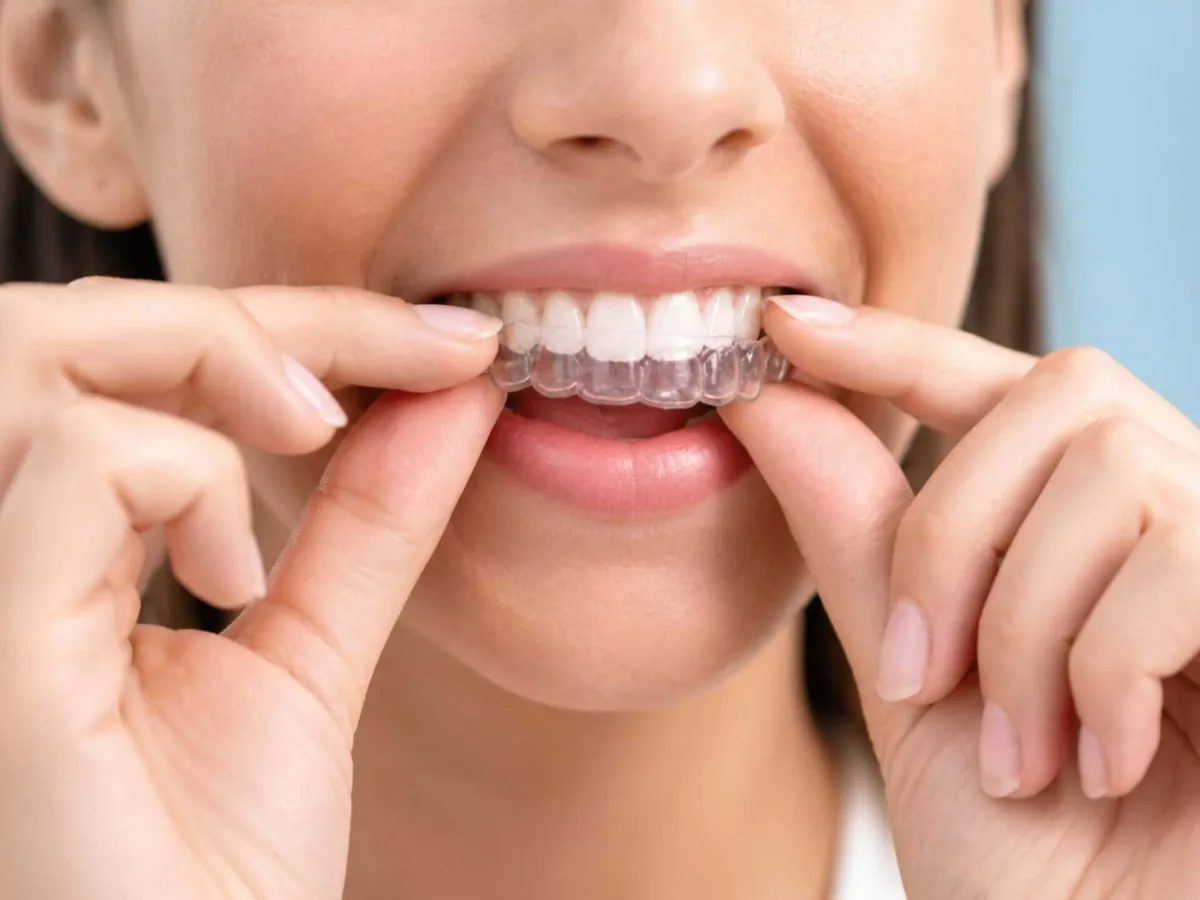
A custom night guard made by a dentist is one of the most reliable ways to protect teeth from further damage caused by grinding during sleep. It works by creating a physical barrier between the upper and lower teeth, absorbing the force of clenching so the teeth do not take the impact directly.
The fit of a night guard matters enormously. A guard that is too bulky or does not seat properly can actually worsen jaw strain rather than relieve it. Custom guards are made from impressions of your specific teeth, so they fit precisely and stay in place throughout the night.
Compare this to store-bought options:
Custom night guards fit precisely, last 3 to 5 years with care, and are designed for your specific bite
Boil-and-bite guards are more affordable upfront but wear out faster and may not protect evenly
Stock guards are rarely recommended because they cannot be adjusted to individual bite patterns
For patients who are also candidates for Invisalign® treatment, a dentist can evaluate whether bite correction might reduce grinding triggers related to bite misalignment, though the relationship between bite and bruxism varies from person to person.
Restoring Damaged Teeth When Needed
When grinding has already caused significant enamel loss, chips, or flattened edges, a night guard alone will not restore what was lost. Restorative options depend on the severity of the damage and the number of teeth affected.
Dental bonding can repair small chips and smooth rough edges using tooth-colored composite resin. For more significant wear, porcelain crowns protect and rebuild the shape of a damaged tooth. In cases where the front teeth have shortened noticeably, porcelain veneers can restore natural length and proportion, giving the smile a more youthful, balanced appearance that patients and their families in West Covina often find meaningful.
Restoration and protection work best as a team. Rebuilding worn teeth without also addressing the grinding habit risks damaging the new restorations just as the old teeth were damaged.
When to Schedule an In-Person Evaluation
If you have recognized yourself in any section of this article, the next step is straightforward: an in-person exam where a dentist can examine your specific teeth, jaw, and wear patterns and develop a plan that matches your situation.
Waiting tends to make the conversation more complicated, not less. The earlier grinding damage is identified, the more options are available and the less extensive the treatment needs to be.
Frequently Asked Questions
How Can I Tell If I Was Clenching or Grinding My Teeth in My Sleep Last Night?
The most reliable signs show up in the first hour after waking. Jaw soreness, tightness when opening wide, tender temples, and teeth that ache when you drink something cold are all strong indicators. If a partner has ever mentioned hearing scraping or squeaking sounds at night, that is direct confirmation.
What Early Signs Should I Look for That Grinding Is Wearing Down My Teeth?
Look at your lower front teeth in good lighting. Flat, even biting edges, rather than slightly rounded or pointed ones, suggest wear. Small chips at the corners of the front teeth, without any impact trauma, are another early sign. Increased sensitivity to temperature or acidic foods, even without a cavity, is also commonly tied to enamel thinning from grinding.
What Kind of Tooth and Jaw Damage Can Happen if I Keep Grinding at Night?
Continued grinding without protection leads to progressively thinner enamel, visible tooth shortening, cracked or fractured teeth, and premature failure of dental restorations like crowns and fillings. The jaw joint can develop inflammation and restricted movement over time. In severe long-term cases, bone loss around tooth roots becomes a risk.
Why Do Some People Start Grinding More During Stressful Weeks or When Sleep Is Poor?
Sleep bruxism is driven partly by the brain's arousal system during light stages of sleep. Stress, caffeine, poor sleep quality, and disrupted sleep schedules all increase the frequency and intensity of arousal events, which in turn increase jaw muscle activity. This is why people often notice more symptoms during high-stress periods even if grinding has been ongoing for years.
What Are My Comfortable, Affordable Options for Reducing Grinding Without a Night Guard?
Behavioral strategies can help reduce severity. Limiting caffeine in the afternoon, doing a brief jaw stretching routine before bed, and applying a warm compress to tense jaw muscles in the evening are all reasonable starting points. These approaches reduce muscle tension rather than directly protecting teeth, so they work best alongside, not instead of, professional care for patients with moderate or significant wear.
When Should I Bring My Child in if I Hear Them Grinding Their Teeth During Sleep?
Grinding in young children is common and often resolves on its own as baby teeth are replaced by permanent teeth. If your child is still grinding after age six or seven, or if you notice visible wear or they complain of jaw soreness, an evaluation is a reasonable next step. A dentist can monitor the wear and advise whether any protective measures are needed.
Take the Next Step Before the Damage Goes Further
Grinding your teeth at night is not just a habit. It is a physical process that wears away enamel, strains your jaw, and chips away at dental work you have invested time and money in. The good news is that catching it at any stage opens up real options for protection and repair.
The most important thing you can do right now is stop waiting on symptoms you have already noticed. Morning jaw pain, flat or chipped teeth, and daily headaches are your body's way of asking for attention, not minor inconveniences to push through.
Ready to get some real answers about your smile? Call Dentist of West Covina at (626) 239-8978, and the team will find a time that works for you. You can also book your appointment online and get a personalized plan that fits both your goals and your schedule.