Deciding between braces vs Invisalign® for teens is not one-size-fits-all. The wrong choice can mean extra time, extra cost, or a frustrated teenager who stops cooperating with treatment.
When you understand exactly how each option works in daily teen life, including school photos, sports practice, and after-school snacks, the right choice starts to become much clearer.
This guide to Invisalign® for teens walks you through the real differences between both treatments. We cover everything from what a dentist looks for at the first evaluation to how costs add up over time.
The team at Dentist of West Covina works with teens and families regularly, and the guidance here reflects what actually matters in practice, not just in theory. Keep reading to find the information that makes this decision feel manageable.
How Teen Orthodontic Treatment Works
The teen years are one of the most important windows for orthodontic correction, because the jaw is still developing and teeth respond faster to movement than they will in adulthood. An initial orthodontic consultation helps you walk in prepared to ask the right questions. Your provider will evaluate the specific needs of your child's developing smile.
Why Timing Matters During the Teen Years
Most teens still have some jaw growth happening between ages 11 and 16, which means their bones are more responsive to guided movement. That is why early orthodontic treatment for kids and teens tends to produce faster and more stable results than waiting until adulthood.
Orthodontics typically recommends a first evaluation around age 7, even if braces or aligners are not started until later. The goal is to catch developing problems early, not just cosmetic ones, but functional ones that affect chewing and speech.
What A Pediatric Dentist Or Orthodontist Looks For
At a pediatric dentist evaluation or a first dental clinic appointment for kids, the provider does much more than count crooked teeth. They assess jaw development, the spacing between erupting teeth, and whether any baby teeth are interfering with proper alignment.
X-rays play a big role here. They reveal where permanent teeth are positioned below the gumline, which helps the provider plan timing and recommend whether Invisalign® or braces is the stronger fit for that specific case.
Alignment Problems That Often Need Treatment
There are specific alignment concerns that traditional braces can correct more reliably than aligners. These include severe overbite, underbite, crossbite, and significant crowding. Invisalign® handles mild to moderate cases well, but complex bite problems often need the consistent force that fixed brackets and wires provide.
Knowing which category your teen falls into is the first real step. Orthodontic care for long-term function means correcting the bite structure, not just making teeth look straighter in photos. A children's dentist can refer you once they identify what kind of correction your teen needs, and that referral can save you from starting a treatment that is not the right tool for the job.
Day-to-Day Differences Teens Actually Notice
The gap between how braces and Invisalign® feel in real life is bigger than most parents expect, especially when your teen is navigating school, sports, and a social life all at once. The differences in appearance, comfort, and daily maintenance are what determine whether your teen cooperates with treatment or quietly resents it.
Appearance At School And In Photos
Traditional braces are visible, and for many teens, that visibility is a real concern. Metal brackets and wires show up clearly in photos and video calls. Some families choose ceramic braces as an alternative. These use tooth-colored brackets to blend in more naturally with the enamel while still providing the strength of fixed hardware.
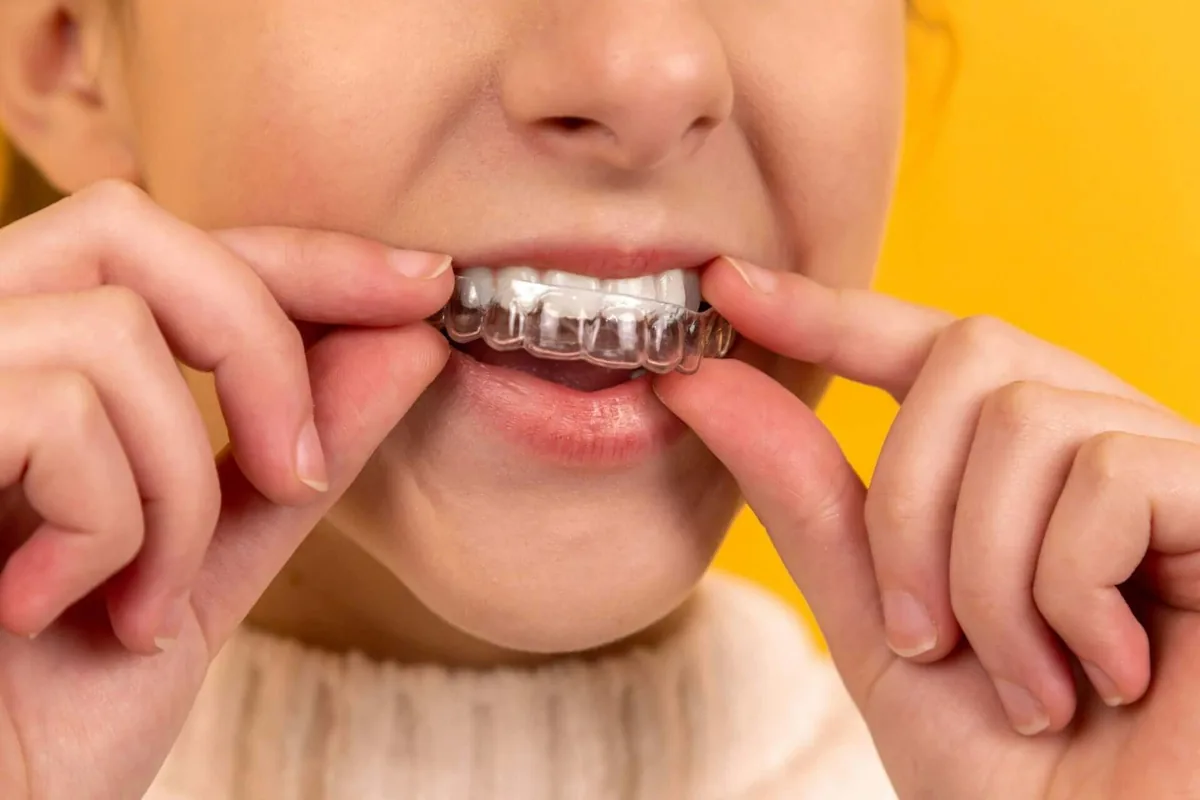
These removable aligners are nearly invisible from a normal conversational distance. Most classmates will not notice them at all. For teens who are already self-conscious, that low profile can make a meaningful difference. It changes how they show up at school and in social settings every day.
Comfort During Sports, Music, And Social Events
Teens who play contact sports face a real risk with braces: a hit to the mouth can push a bracket into the inner lip, causing a cut that needs same-day attention. Invisalign® trays are smooth and removable, so your teen can take them out for a game and put them back in afterward.
For teens who play wind instruments, the difference is just as noticeable. Metal brackets change the feel of the mouthpiece and can take months to adjust to, while clear aligners can be removed for rehearsal. Comfort-first dental treatment is not just about soreness after adjustments; it is about whether treatment works with your teen's real schedule.
Eating, Brushing, And Keeping Up With The Routine
Braces come with a list of foods to avoid: popcorn, sticky candy, hard chips, and anything that can snap a wire. Invisalign® has no food restrictions because the trays come out before meals.
Brushing and flossing with braces takes longer because food can get trapped around the brackets. A dental cleaning during orthodontic treatment with braces usually requires extra scaling around the hardware.
Invisalign® trays need to be rinsed and kept clean, and your teen must brush before putting them back in, which adds a step after every meal. At a dental checkup, the provider can catch any hygiene issues that develop with either type of treatment before they become bigger problems.
Who Tends To Do Better With Each Option
The honest answer is that Invisalign® is only as effective as the person wearing it, which makes personality and daily habits a real clinical factor in the recommendation. Most of the time, the tipping point between the two options comes down to one specific question about your teen's reliability.
Best Fit For Responsible Teens
The Invisalign® Teen system requires 20 to 22 hours of daily wear to stay on schedule. These trays often include compliance indicators to show if they are being worn enough.
Teens who set phone reminders and follow routines without being reminded tend to do well with aligners. If your teen manages their own schedule, they are likely a good candidate. If your teen already manages homework, after-school commitments, and their own morning routine without much prompting, that is a good sign.
A family dentist in West Covina can help you assess this honestly during a consultation. They see a wide range of teen patients and can give you a straightforward read on whether your teen's habits are likely to support Invisalign® success.
When Fixed Braces May Be The Safer Choice
If your teen regularly forgets assignments, loses items, or needs consistent reminders for basic routines, braces are the more reliable path. Treatment cannot fall behind because they forgot to put the trays back in after lunch. The progress is continuous because there is nothing to remove.
Braces are also the stronger clinical choice for moderate-to-severe bite issues that require more precise force over a longer period. Sedation dentistry is available if your teen has significant dental anxiety that makes appointments difficult, and that option exists for either treatment path.
Questions Parents Should Ask At The Consultation
Go into the consultation with a short list of direct questions so you leave with clear answers, not just a brochure.
How complex is my teen's case, and does the severity favor one treatment?
Based on what you know about teens this age, is Invisalign® wear-time realistic for this case?
What happens if my teen loses an aligner tray or breaks a bracket?
Will treatment require any tooth extractions or expanders before we start?
What does the full timeline look like from start to retainer?
These questions give the provider a chance to be specific, and they help you compare answers if you visit more than one practice.
Cost, Maintenance, And Long-Term Value
Both treatments fall within a similar price range for most teens, but the full cost of orthodontic care for long-term function exceeds the initial quote. Understanding what is and is not included upfront prevents surprises when a retainer breaks or a follow-up visit is needed six months after treatment ends.
What A Treatment Quote Usually Includes
Most orthodontic quotes cover the brackets or aligner series, scheduled adjustment appointments, and the first set of retainers. Some practices include a set number of replacement aligners in the Invisalign® quote, which matters if your teen loses a tray. Ask specifically whether the quote is all-inclusive or itemized, because the answer changes how you compare two providers.
The cost of braces and Invisalign® typically ranges from $3,000 to $7,000, depending on case complexity. Most practices provide a detailed breakdown during your first visit. Many dental insurance plans cover a portion of treatment for teens.
This is usually a lifetime orthodontic benefit rather than an annual one. Payment plans are standard at most practices and can spread the cost over the length of treatment.
Retainers, Repairs, And Follow-Up Visits
Retainers are not optional after treatment. Teeth move back toward their original positions without them, and that undoes years of work. Most teens need to wear retainers full-time at first and then nightly long-term.
Braces can break. A snapped wire or loose bracket means an unplanned visit to the office for repair. Invisalign® trays can crack or get lost, and replacement trays have a cost if you exceed the replacement set included in your plan. A deep dental cleaning in West Covina may also be recommended after braces come off to remove buildup that formed around the brackets during treatment.
How To Think About Value Beyond Looks
A properly corrected bite reduces wear on individual teeth, lowers the risk of jaw pain in adulthood, and makes it easier to clean teeth thoroughly, which affects gum health over a lifetime. Choosing the treatment your teen will actually follow through with is worth more than choosing the one that looks better on paper.
If your teen commits to Invisalign® and wears the trays consistently, the results are comparable to braces for mild to moderate cases. If they do not commit, braces deliver more predictable progress regardless of motivation. Value comes from picking the option most likely to succeed for that specific teen.
Frequently Asked Questions
Both the cost and the compliance question come up in nearly every family consultation, and the answers are more nuanced than a quick online search suggests. The questions below reflect what families in West Covina ask most often before making a final decision.
Which option is usually more comfortable for teens day-to-day?
Invisalign® is generally more comfortable because the smooth plastic trays do not have brackets or wires that press against the inner cheeks. Braces can cause soreness after each adjustment appointment, and a loose wire may cause irritation between visits. That said, both options involve some discomfort when teeth are actively moving.
How do the costs typically compare, and what does insurance often cover?
Both braces and Invisalign® typically fall between $3,000 and $7,000, depending on case complexity. Many dental insurance plans include a lifetime orthodontic benefit that applies to either treatment, though the covered amount varies by plan. Payment plans at most orthodontic practices allow families to spread the cost over the length of treatment.
Which treatment tends to work faster for common teen orthodontic issues?
Treatment time for both options is similar, typically 12 to 24 months for most teen cases. Braces sometimes move teeth faster for complex issues because the force is applied continuously with no option to remove the hardware. Invisalign® can match that timeline, but only if the trays are worn consistently for the full 20 to 22 hours per day.
What kinds of bite or alignment problems are better suited to each option?
Braces handle severe crowding, significant overbite, underbite, and crossbite more reliably than aligners. Invisalign® works well for mild to moderate misalignment, small gaps, and minor crowding. Your orthodontist will assess the severity of your teen's case to determine which option can deliver the necessary correction.
How hard is it for teens to keep up with cleaning and wear-time requirements?
Braces require more time brushing around brackets and periodic deep cleaning appointments, but teens do not have to remember to put anything back on. Invisalign® cleaning is simpler since the trays come out, but teens must rinse trays, brush after eating, and log 20 to 22 hours of daily wear to stay on track. Responsible teens generally manage both; less consistent teens do better with braces.
Is one option a better choice for a 12-year-old who's still growing?
For younger teens who are still actively growing, braces are often the more reliable choice because they work regardless of whether they remember to wear them. A 12-year-old's jaw is still developing, which can also affect how well aligners fit as the mouth changes shape. An orthodontic evaluation at this age gives you the clearest picture of what the jaw is doing and which treatment fits the developmental stage.
The Right Choice Starts With The Right Conversation
Picking between Invisalign® and braces for your teen is not a decision you have to make based on guesswork or social media opinions. The clearest path forward is an honest evaluation with a provider who knows your teen's specific dental situation, your family's schedule, and what your teen is actually willing to commit to over the next one to two years.
What works for one teen will not work for another, and the treatment that sounds better on paper is not always the one that delivers the best result. The teens who finish treatment on time and love the outcome are the ones whose families chose based on clinical fit and realistic expectations, not just appearance or price.
The team at Dentist of West Covina is here to help your family work through that decision without pressure. Call us today at (626) 386-5455 or book your appointment online to schedule a consultation and get a clear, honest recommendation for your teen's smile.